Contour Light:Non-Invasive Body Contouring 101
If you have been exercising, eating well, and still cannot budge that last bit of fullness around your waist, hips, or thighs, you are not alone. Stubborn areas are one of the most common frustrations we hear about from patients across St. Petersburg and Pinellas County. Contour Light is one tool that may help, as long as you understand what it does, what it does not do, and how to get the most from it.
6 min read
On this page
What Is Contour Light?
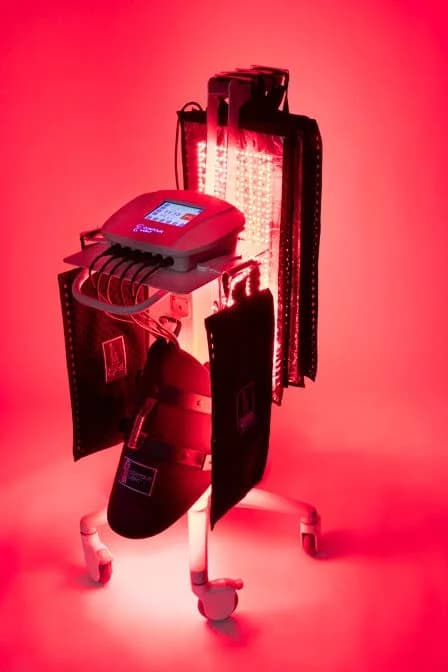
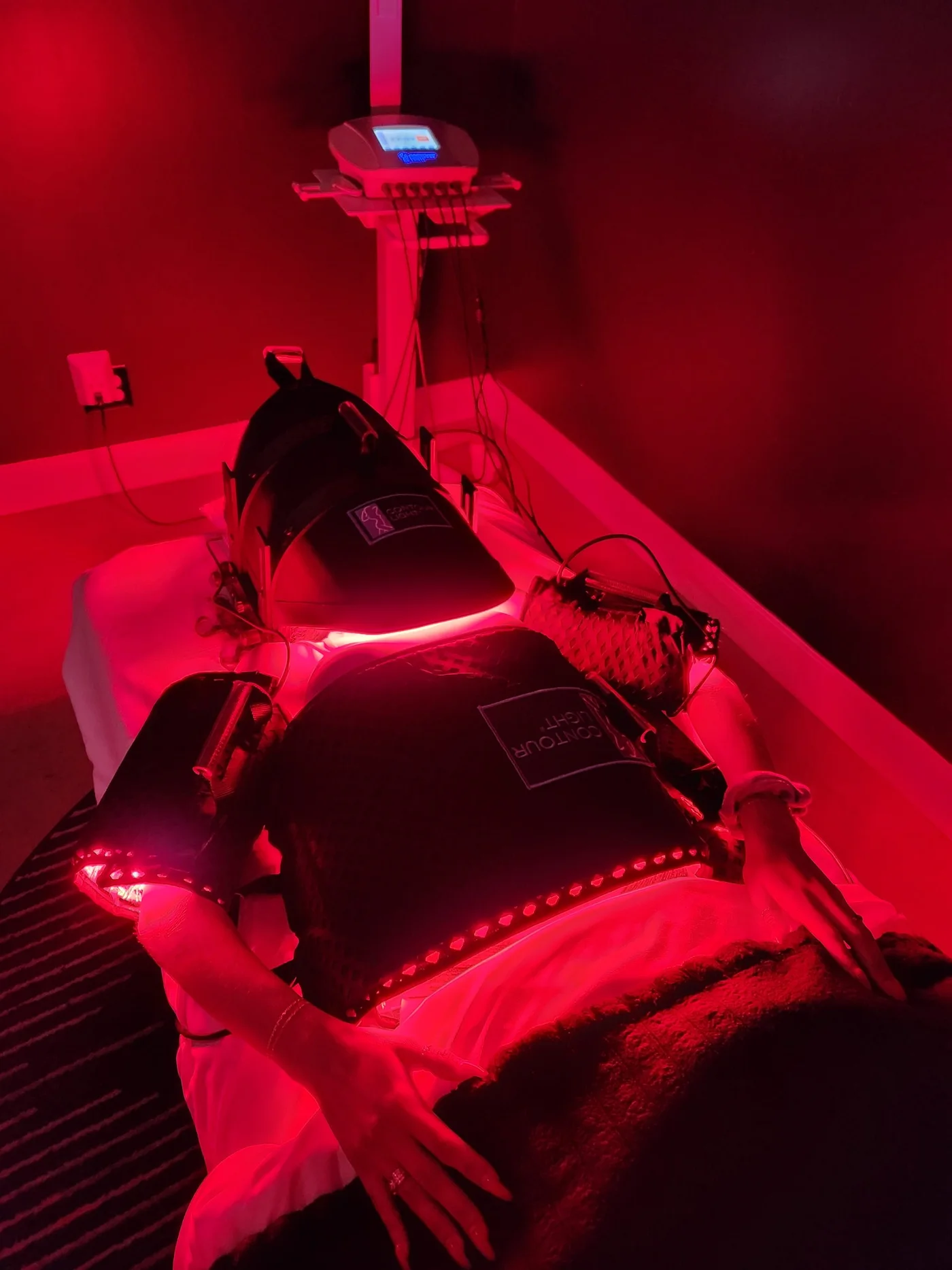
Contour Light is a low-level light therapy system. It uses panels of light-emitting diodes (LEDs) placed close to the skin, emitting red light at 635 nanometers and near-infrared light at 880 nanometers.
In May 2021, the FDA cleared the Contour Light CL-100 as a non-invasive aesthetic treatment for reducing the circumference of the hips, waist, and thighs. It is also cleared to provide gentle topical heat for temporary relief of minor muscle and joint aches and stiffness, and to temporarily increase local circulation.
How Does It Work?
The light-and-fat-cell mechanics
Fat cells store energy as triglycerides. Low-level red light is thought to make the fat cell membrane temporarily more permeable, letting some of the stored contents move out of the cell. The body can then process those released fats through normal metabolic pathways.
Two points patients often find reassuring, or surprising:
- The fat cells are not destroyed. They shrink as they release contents. This is different from treatments that freeze or surgically remove fat.
- What you do matters afterward. Because the cells remain, they can refill if calorie intake stays high. That is why Contour Light works best as part of a broader plan.
The role of each wavelength
The 635nm red light is the wavelength associated with the circumference-reduction indication. The 880nm near-infrared light is associated with gentle tissue warming.
What Is a Session Like?
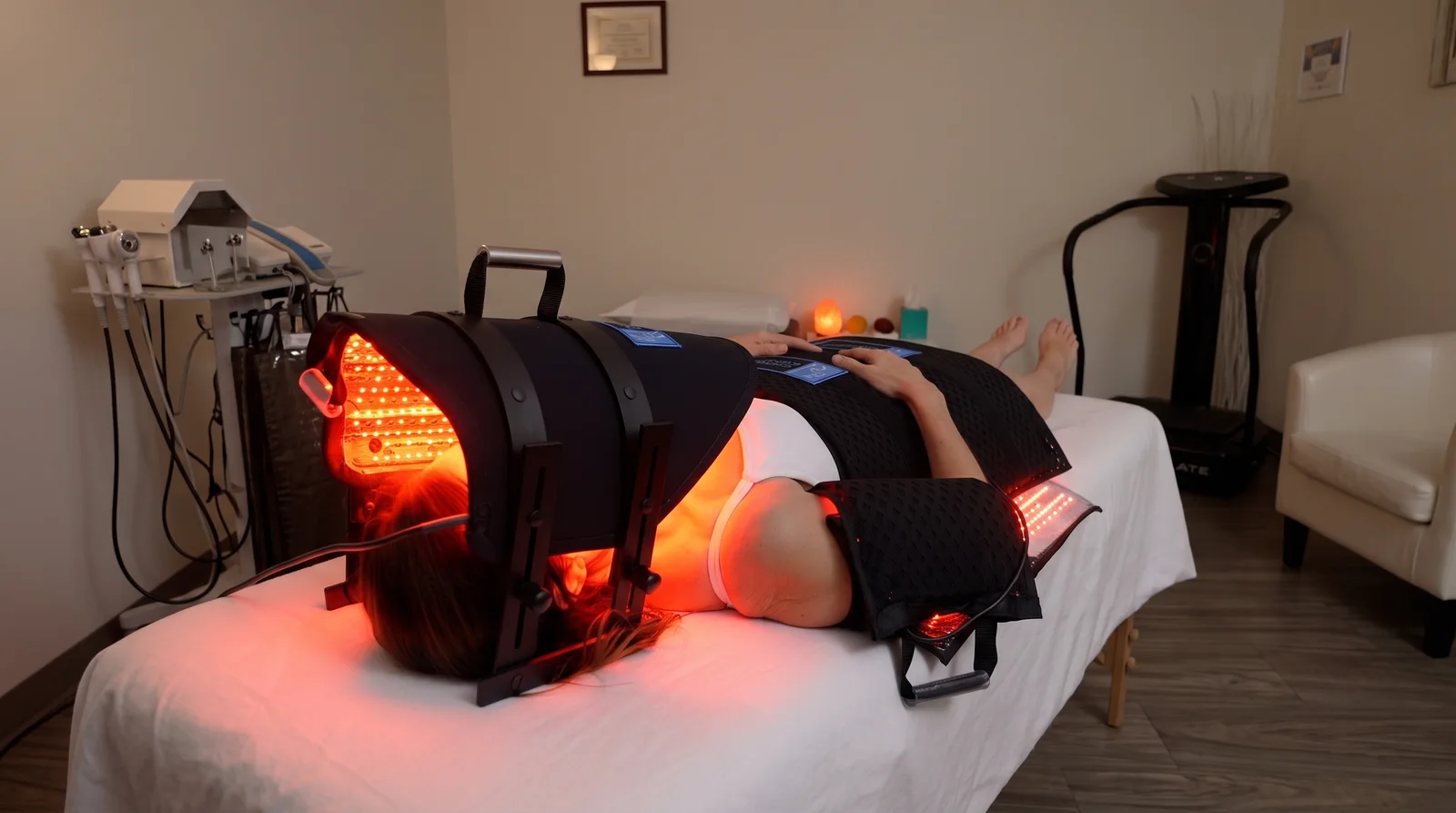
You will lie comfortably while the LED panels are positioned around the treatment areas. No needles, no anesthesia, and no incisions. Most people describe the treatment as warm and cozy.
- Session length
- The FDA-cleared protocol uses a 25-minute light treatment. At Water's Edge, each visit adds time on the vibration platform, about 45 minutes end to end.
- Downtime
- None expected. Many patients go straight back to work, or to the beach.
- Series
- A series of sessions spaced a few days apart over several weeks is often recommended rather than a single visit.
What Results Can You Realistically Expect?
Light-based contouring produces modest, measurable changes, typically a matter of inches across the combined arms, abdomen, hips, and thighs. In a sham-controlled study of a similar 635nm red-light device published in Lasers in Surgery and Medicine (2009), researchers treated 67 adults over two weeks. The active-treatment group averaged a 3.51-inch total circumference reduction across the waist, hips, and thighs, compared with 0.68 inches for the sham group. Contour Light has its own clinical data; your provider can walk you through what the studies measured and how individual results varied.
- Active treatment
- 3.51 in
- Sham treatment
- 0.68 in
Sham-controlled study of a similar 635nm device, Lasers in Surgery and Medicine, 2009, 67 adults, two weeks. Source: contourlight.com (opens in a new tab)
Results vary from person to person. Hydration, activity level, nutrition, and consistency with the full series may all play a role. We take measurements before and after so you can see your own progress rather than relying on a mirror alone.
Tips that may help
- Stay well hydrated during your treatment series.
- Avoid eating 2 hours prior to treatment, for best results.
- Add light movement, such as a walk along the waterfront or the Pinellas Trail, after sessions.
- Keep an eye on alcohol and sugary drinks, which can work against your goals.
- Red light therapy works best with clean skin. Do not apply lotions/oils before treatments.
Who Is a Good Candidate?
Contour Light may be a good fit for adults who:
- Are at or near a stable, healthy weight but have stubborn areas on the waist, hips or thighs
- Want a no-downtime option and are comfortable with gradual, modest change
- Are willing to support results with healthy habits
It may not be right for everyone. Your provider will review your medical history. Conditions that may require caution or rule out treatment can include pregnancy, certain medications that increase light sensitivity, active cancer, implanted electronic devices near the treatment area, and open wounds or skin conditions in the area.
Contour Light vs. LipoLight vs. CoolSculpting vs. Liposuction
Contour Light vs. LipoLight
Both use red LED light at similar wavelengths and share the same basic concept. They differ in device design (panels vs. strap-on pads) and in their regulatory history. Contour Light has its own FDA clearance for circumference reduction of the hips, waist, and thighs.
Contour Light vs. CoolSculpting
Cryolipolysis uses controlled cooling to damage fat cells, which the body gradually clears over weeks to months. Contour Light does not destroy fat cells. It is gentler, with no expected downtime, but results depend more on your ongoing habits.
Contour Light vs. liposuction
Liposuction is surgery that physically removes fat. It can produce larger changes but involves anesthesia, recovery time, and surgical risks. Contour Light is a non-surgical option for people seeking smaller refinements.
None of these is "best" for everyone. The right choice depends on your goals, your budget, your tolerance for downtime, and your health history.
Frequently Asked Questions
Contour Light is FDA-cleared (not "approved," which is a different pathway) as a non-invasive aesthetic treatment for reducing the circumference of the hips, waist, and thighs. It is also cleared for temporary relief of minor muscle and joint pain.
Ready to See if Contour Light Is Right for You?
The best first step is an honest conversation about your goals. At Water's Edge Spa in St. Petersburg, we will review your health history, take baseline measurements and help you decide whether Contour Light, another treatment, or a combination makes sense for you.
Call 727-550-0855 to book your consultation at Water's Edge Spa.